Description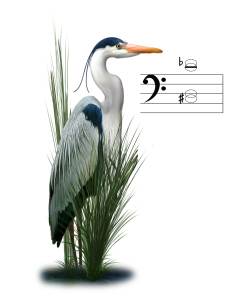
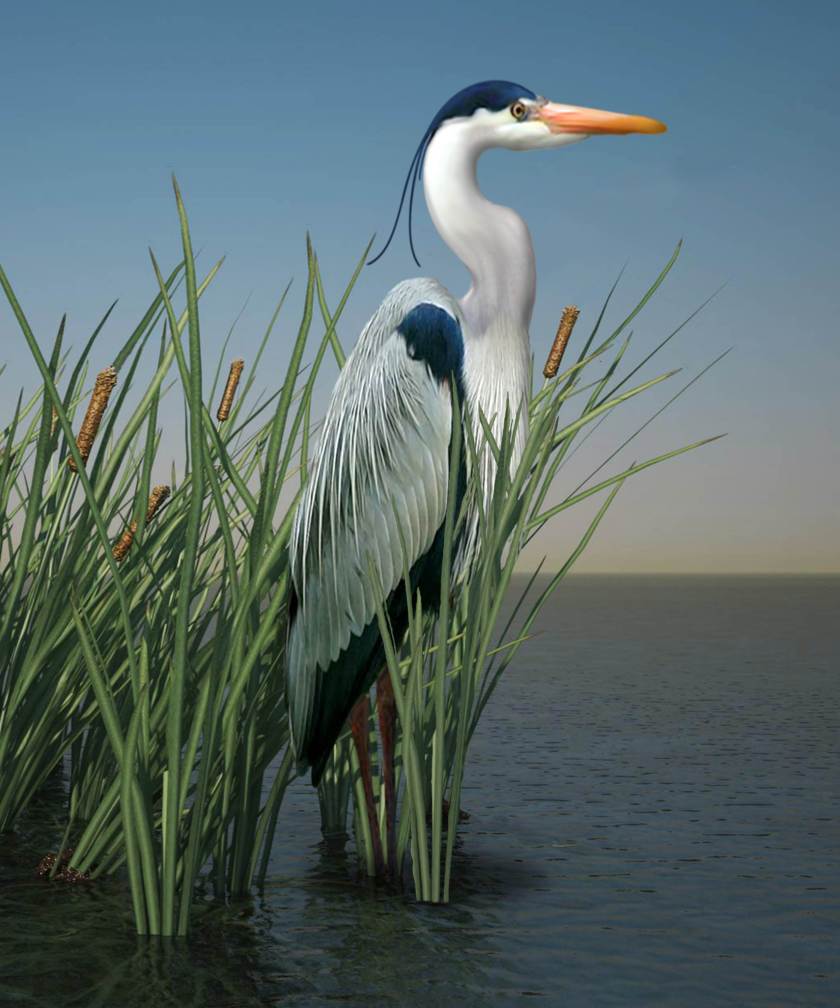
A large, stately, blue-gray bird the Great Blue Heron, Ardea herodias, has wide black stripe over the eye; long, yellow legs; a sinuous neck with special vertebra; and a dagger-like bill. Its shaggy appearance is due to wing plumes, specialized chest feathers that continually grow and fray as the bird combs them with a fringed claw. When preening, a heron applies the resulting “powder down” to underpart feathers as a protection from organic oils and slime.
Habitat and Habits
In flight the Great Blue Heron tucks the neck into an “S” shape and trails its long legs behind, creating a distinctive silhouette. On the ground when hunting, the great blue heron can be found wading slowly in shallow water, taking long, deliberate steps and then standing motionless, scanning for prey until it strikes at great distance with lightning speed, darting its head below water to capture a fish, often swallowing it whole. If the fish is unexpectedly big, however, the heron can actually choke! (Wolf, B. O. and S. L. Jones. 1989. Great Blue Heron deaths caused by predation on Pacific lamprey. Condor 91:482–484.)
Great Blue Heron numbers have increased in recent decades across North America, except for a white subspecies, the “great white heron” found along the southern Florida coast. Several hundred breeding birds can nest together in a “heronry,” each nest built of sticks, usually high off the ground. Courtship and bonding displays are elaborate and vocal.
Sounds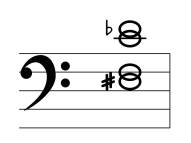
Herons do not sing. Rather, the birds greet their partners with squawking roh-roh-rohs in a “landing call” when arriving at the nest. A disturbance can trigger a series of clucking go-go-gos, building to a rapid frawnk squawk that can last up to 20 seconds. The heron can also emit a deep, croaking graaaak, in flight that sounds more like a belch than a bird’s call (bird watchers digest)
Having spent my summers growing up on the Eastern Shore (The Delmarva Peninsula), I was delighted to read Chesapeake, and I was particularly enchanted with James Mitchner’s description of the initial encounter of the book’s first hero, Pentaquod, with a great blue heron (p.17):
Kraannk! It was one of the ugliest sounds in nature, as awkward and ungainly as the creature that uttered it …. an elegant bird that landed with a crash and a clutter, throwing mud and water as it dug its feet in to stop…, who then ran a few additional steps and took off again, flapping its huge blue wings and soaring slowly, and spaciously into the sky.
Clearly not the bird I am searching for, the majestic blue heron is still one of my favorite birds – particularly because it resides in both fresh and salt water environments, truly representing a full watershed.
Sound links to the Great Blue Heron:
- https://www.allaboutbirds.org/guide/Great_Blue_Heron/sounds
- http://www.almanac.com/content/bird-sounds-great-blue-heron
- http://www.audubon.org/field-guide/bird/great-blue-heron (lower right corner of page)
- https://www.birdwatchersdigest.com/bwdsite/learn/identification/wading-birds/great-blue-heron.php (Lang Elliot, NatureSound Studio)
- http://www.junglewalk.com/sound/Heron-sounds.htm#.WUp8fOvyvIU
- https://www.soundsnap.com/tags/heron (acoustic representations) https://www.youtube.com/watch?v=LbNcdRrrJHs
- http://www.xeno-canto.org/species/Ardea-herodias (52foreground recordings and 21 background recordings of Ardea herodias )
Products
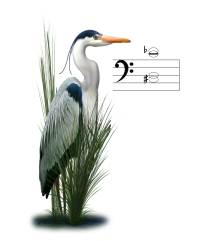
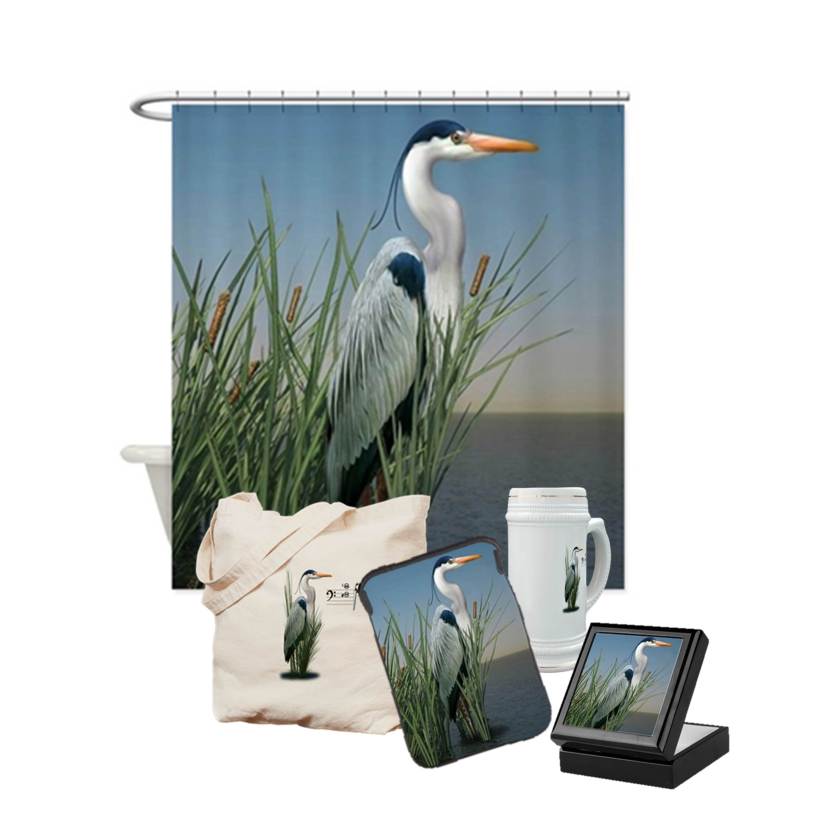
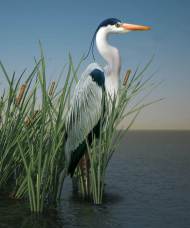 Visit the Avian Note Art collection at Watershed Wildlife Designs (watershedwildlifedesigns.com) to find these heron designs on a wide variety of items, such as:
blankets, pillows, totes, shower curtains, shirts, hoodies, mugs, greeting cards, aprons, cutting boards, pot holders, phone and ipad covers. And more!
Gifts for birdwatchers, friends, and family!
 Avian Note Art